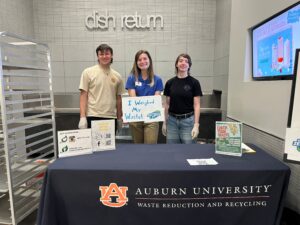
WRRD student employees Zach Sanders and Amelia Bates, along with WRRD specialist Cassidy Hartog (center), prepare materials for a Weigh the Waste event.
Every day, small choices at dining halls across campus add up and the Waste Reduction and Recycling Department (WRRD) helped students see just how much food goes uneaten through two recent Weigh the Waste events at the Village Tiger Zone.
Plates of leftover food, scraped into buckets at the exit, became a powerful visual reminder of how easy it is to take more than can be eaten.
Cassidy Hartog, WRRD specialist, has been observing student dining habits during the Weigh the Waste initiative. One of her key takeaways is the wide variation in food waste among students. While averages suggest consistency, individual behavior tells a different story.
“Some plates contained large amounts of waste, many students had none at all,” Hartog said. “I am encouraged to see how many students were mindful about the portions they selected and intentional about what they chose to take, evidence that reducing food waste is already within reach.”
During each event, staff collect and weigh post‑consumer food waste in real time, updating totals on a whiteboard every 15 minutes. Students can watch the numbers climb as the evening goes on, turning an abstract idea such as food waste into something tangible.
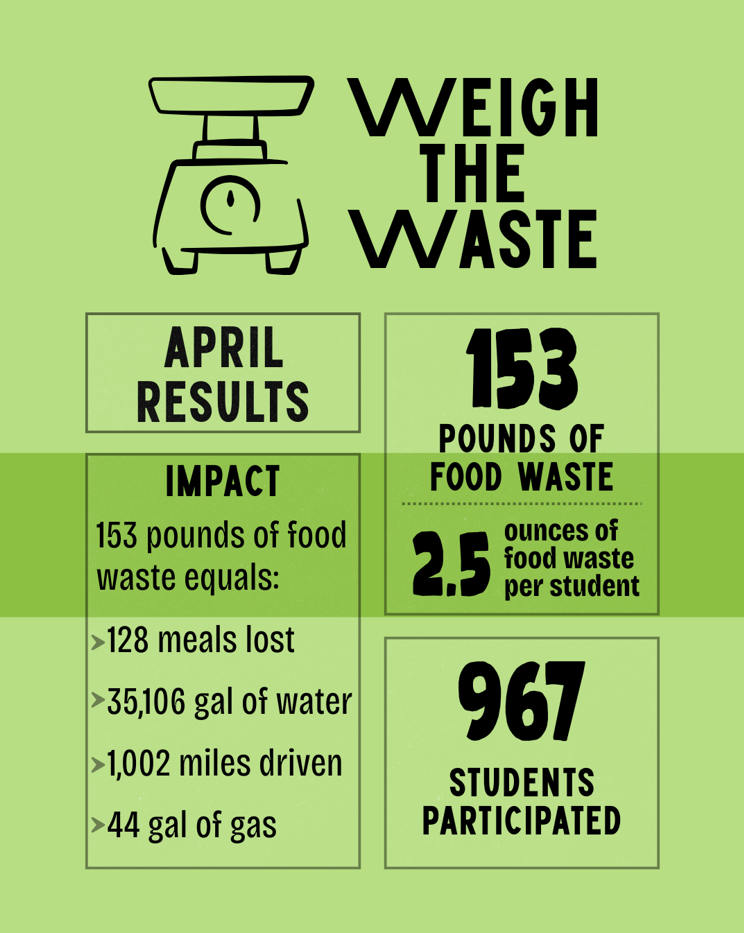
In March alone, more than 160 pounds of food waste were collected in four hours, followed by another 153 pounds in April. On average, that’s about 2.5 ounces of food wasted per student per meal which is often just a scoop here or a bite there.
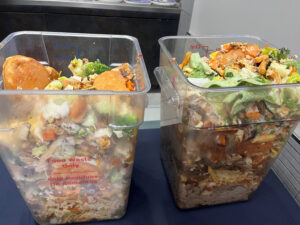
More than 30 buckets of food waste were filled and weighed at each event.
Early trends show familiar habits: buffet‑style dining encourages extra portions, hunger is sometimes overestimated, and new foods don’t always become favorites.
“When people see the actual amount of waste produced, they are more likely to change their behavior,” said Joan Hicken, WRRD manager, “The goal of Weigh the Waste is to spark awareness. Simple strategies like taking smaller portions, sampling before committing and going back for more if needed can make a meaningful difference.”
One plate at a time, these events help turn everyday dining decisions into opportunities for sustainability.
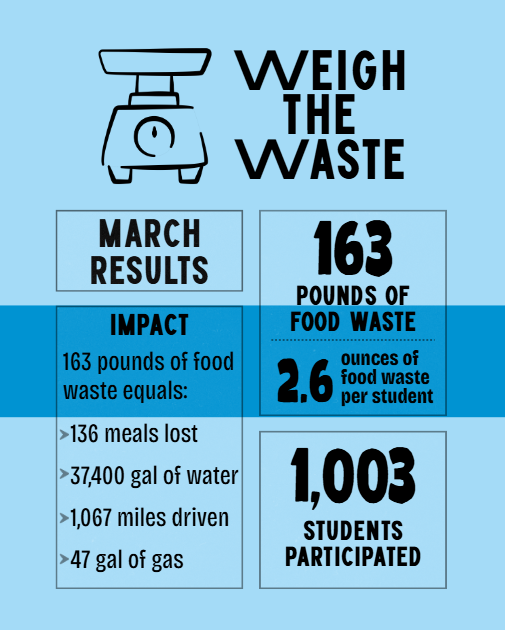
Photos and infographics courtesy of the Waste Reduction & Recycling department.